
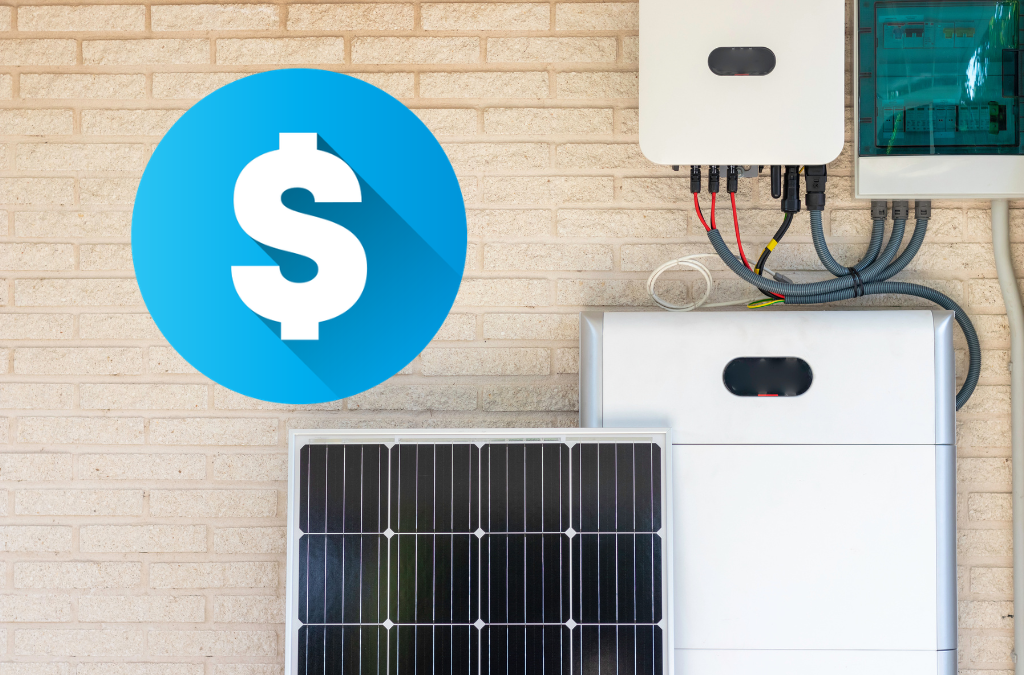
The federal government’s Cheaper Home Batteries program has genuinely changed the conversation around solar battery cost in Australia. Demand has been overwhelming – more than 180,000 installations were completed in the first year alone – and the budget has since been tripled to support a target of two million homes by 2030.
The program delivers a 30% reduction in solar battery cost for eligible households – which is a significant saving on what was already becoming a much more accessible technology.
But if you’re interested but not yet sure what it’s actually going to cost for your specific situation, you’re not alone. The honest answer is that solar battery system cost varies considerably from one household to the next – and understanding why is the first step toward getting a number that’s actually relevant to you.
This guide walks you through it in 6 simple steps:
Why is it hard to get a straight solar battery cost?
Search ‘solar battery cost Australia’ and you’ll find a wide range of figures. That’s not because the industry is being evasive – it’s because the embedded cost of battery for solar setups genuinely depends on a set of variables that differ from property to property. The exact same battery model can cost very different amounts to install, depending on:
- Your existing setup
- Your energy needs
- Where you live.
We’ve broken down each of those variables into 6 simple steps – so you can start building a realistic picture of what your installation is likely to cost before you pick up the phone for a quote.
Step 1: Understand what you’re actually buying
A solar battery storage cost includes more than just the battery unit itself. The total price of a complete installation typically covers:
The Battery Unit: The largest single cost – price varies significantly by brand, capacity, and chemistry.
The Inverter: If you don’t already have a compatible hybrid inverter, adding or replacing one adds meaningfully to the total.
Installation Labour: Charged by a licensed electrician – complexity and location both affect how much.
Switchboard Work: Older or full switchboards often need upgrading before a battery can be safely connected.
Metering & Monitoring: Usually a smaller cost but necessary for the system to communicate and be rebate-compliant.
Compliance & Certification: Non-negotiable for safety, insurance, and rebate eligibility – always included by accredited installers.
The battery unit is usually the largest single cost – but it’s rarely the only one. Getting a quote that covers the full scope rather than just the hardware is the only way to know what you’re actually committing to.
Step 2: Work out how much storage you actually need
Battery capacity is measured in kilowatt-hours (kWh) – the amount of energy the battery can store and discharge. The right capacity for your home depends on:
- How much electricity you use after the sun goes down
- How much excess solar your panels generate during the day
- Whether you want full backup capability or just partial offset.
Here’s a rough way to think about it:
- The average Australian household uses somewhere between 15 and 25 kWh per day.
- Solar panels typically generate their excess during a 4-6 hour window in the middle of the day.
- A battery that captures and stores that excess for evening use might need to be anywhere from 5 kWh to 15 kWh or more depending on your consumption pattern and your solar system’s output.
Oversizing costs more upfront without delivering proportional benefit … while undersizing means you’re still drawing heavily from the grid every evening. Getting the sizing right for your actual usage is one of the most important decisions in the whole process – and a good installer will assess your consumption data before recommending a size.
Step 3: Factor in your existing solar setup
The cost of a solar battery installation varies significantly depending on whether you already have solar panels and what type of inverter is currently installed.
Do you:
Already have a standard string inverter?: Adding battery storage typically requires either replacing it with a hybrid inverter or adding an AC-coupled battery system that works alongside it. Both approaches work – but they have different cost implications.
Already have a hybrid inverter installed?: The battery addition is more straightforward and generally less expensive because the infrastructure is already in place.
Not have solar panels at all?: A combined solar and battery system installed together is almost always more cost-effective than doing them separately at different times.
Your existing setup is one of the first things a qualified installer will assess – and it’s one of the biggest variables in the overall cost of a solar battery system.
Step 4: Understand what drives the price of the battery itself
Not all batteries are priced equally – and the differences aren’t arbitrary. The main factors that influence the cost of solar battery units are:
Capacity: Larger batteries cost more. A 5 kWh unit costs less than a 10 kWh unit from the same manufacturer, and so on.
Chemistry: Most residential batteries sold in Australia today use Lithium Iron Phosphate (LFP) chemistry – safer, more thermally stable, and longer-lasting than older lithium chemistries. Premium LFP batteries from established manufacturers typically cost more than budget alternatives, but they also carry better warranties and more reliable performance data.
Brand & Warranty: Established manufacturers with local offices, proven Australian track records, and comprehensive warranties command higher prices – and generally justify them. A 10-year warranty with a 70% capacity retention guarantee is meaningfully different from a shorter or less specific warranty on a cheaper unit.
Scalability: Modular battery systems that allow you to add capacity over time tend to cost slightly more per kWh at the entry level – but offer flexibility that flat systems don’t.
Step 5: Account For Installation Variables
The cost for solar battery installation labour varies depending on:
- The complexity of your switchboard and whether it needs upgrading
- The distance between the battery, inverter, and switchboard
- Whether the installation is indoor or outdoor
- Your location – metropolitan and regional areas price differently
- The installer’s experience and accreditation level.
A switchboard that needs upgrading before a battery can be safely added is one of the most common sources of unexpected cost in battery installations – and one worth asking about explicitly before committing.
Step 6: Apply the government rebate
The federal Cheaper Home Batteries program delivers a 30% reduction in solar battery cost for eligible households – which is the single most significant financial factor for most people considering storage right now. With the program already having supported over 180,000 installations in 2025 and the budget tripled to reach two million homes by 2030, the rebate is accessible and worth acting on sooner rather than later.
Eligibility generally applies to residential properties installing a new battery system through an accredited installer. The rebate is applied at the point of installation – reducing your upfront cost rather than arriving as a reimbursement later.
The cost of a solar battery after the rebate is applied is meaningfully different from the sticker price – and it’s the number that should be driving your decision.
Step 7: Get a quote that covers the full scope
The only way to get an accurate solar battery storage cost for your specific situation is a proper assessment by a qualified solar installer – one that looks at:
- Your energy consumption data
- Your existing solar setup
- Your switchboard
- Your preferred battery capacity
- The physical installation requirements of your property.
A quote that covers the full scope – hardware, labour, switchboard work, and any additional electrical work – is the only quote worth comparing. A low headline figure that doesn’t include everything is not a lower price; it’s an incomplete one.
Ready to find out what it’ll cost for your home?
Tradie Near Me connects Australian homeowners with licensed, insured solar and electrical tradies ready to assess your property and provide an obligation-free quote on solar battery installation – including the federal rebate you’re entitled to.
Get in fast – the program budget won’t last forever. Book online today for your obligation-free quote – and find out exactly what solar battery storage will cost for your home.
Related posts:
 Power Points Not Working? Try Our 10-Step Troubleshooting Guide
 How To Unblock Downpipes: A 6-Step DIY Guide
 Rangehood Installation Cost Guide
 Getting Your Electrical Compliance Certificate QLD Step-By-Step
 Soaring Appliance Running Cost: Survival Guide For Australians
 Hot Water System Installation Cost – What You’ll Pay