When one homeowner tried to claim storm-related roof and ceiling damage through their insurance, they were shocked by the response. The insurer refused to cover the water damage until the roof received “proper maintenance” including the installation of sarking under decades-old concrete tiles.
It’s a frustrating reminder that without regular maintenance, even legitimate storm claims can be denied leaving homeowners to foot the bill.
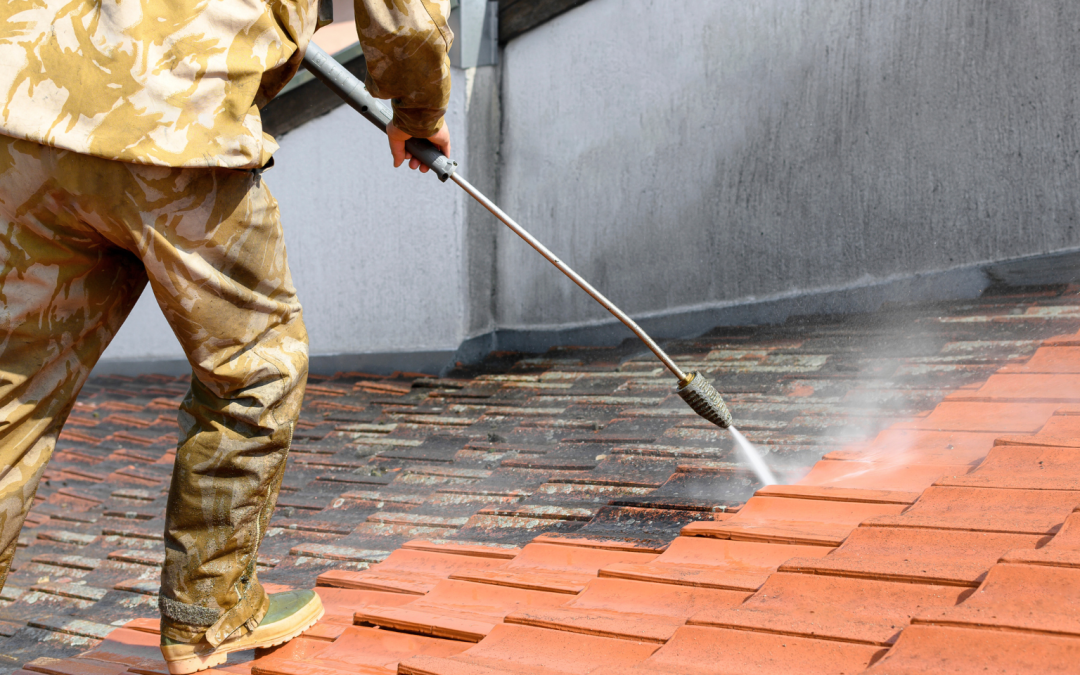
When thick moss, mould, or grime takes hold, arrange a softwash roof cleaning with Jet Set Pro. Roof cleaning is high-risk work and should be done by trained professionals.
Roof Condition Inspection Checklist
Tiles & Metal Sheets
- Broken tiles
- Curling or lifting shingle edges that may allow water entry
- Granule loss; bald or smooth patches
- Rust spots, corrosion, holes, or dents
- Missing fasteners/nails
- Discoloured, warped, or water-stained patches
Flashing & Seals
- Inspect flashing around chimneys, skylights, vents
- Sealant is peeling or missing around roof penetrations
- Lifting or separated flashing edges that could let water underneath
Internal Roof Signs (Attic/Ceiling)
- Dark water stains or damp patches
- Light shining through pinholes or cracks in the roof
- Mould or mildew growth, especially near insulation
- Musty odours
Maintaining Roof & Gutter: Small Roof Problems Grow Fast
Tiles & Metal Sheets – Clear Roof Edges Before They Clog Your Gutters
If any debris is stuck between tiles or under metal sheet overlaps, gently loosen it with a plastic scraper to avoid scratching the surface.
Once the roof edge is clear, move on to the gutters. Scoop out any build-up using a gutter scoop and run a garden hose along the gutter to flush out fine dirt. Watch to see if water drains freely through the downpipes; if it backs up, use the hose on full pressure or a plumber’s snake to clear blockages.
If moss has taken hold, arrange softwash roof cleaning – softwashing gently clears surfaces using low-pressure water and eco-friendly solutions without harming your roof or causing water penetration from high pressure washing.
Flashing & Seals – Seal Every Joint to Stop Leaks Before They Start
Debris settles in flashing corners because wind pushes leaves and dirt into these tight spaces. Water funnels to these points, so what lands there usually stays.
Start by gently brushing away dirt lodged along the edges of the flashing using a narrow brush or an old toothbrush. Scrub stubborn grime or moss with a cloth soaked in a mild detergent solution, then rinse with water and let the area dry completely.
Scrub off any rust or flaking metal from the flashing with a wire brush and wipe it dry. Cut away cracked or peeling sealant along flashing seams, then apply a fresh bead of exterior-grade sealant to create a watertight seal.
Internal Roof – Identify Attic Moisture Before It Becomes Structural Damage
Access the attic safely using a stable ladder. Sweep away dust with a soft broom or a vacuum’s brush attachment, being careful not to disturb insulation.
Check rafters and roof sheeting for damp patches, mould, or water stains, and wipe small mould spots with mild detergent before drying the area thoroughly. Remove and replace any wet insulation to prevent rot, and improve ventilation by opening roof vents or using fans to keep the space dry.
Preventive Measures to Reduce Damage
| Tiles & Metal Sheets | Flashing & Seals | Attic/Ceiling |
| ✔ Reseal flashing joints and gutter seams every 2–3 years to maintain a watertight barrier.
✔ Apply rust-inhibiting primer to metal flashing to prevent corrosion from starting. ✔ Tighten loose flashing fasteners before storm seasons. |
✔ Reseal flashing joints and gutter seams every 2–3 years.
✔ Apply rust-inhibiting primer to metal flashing to prevent corrosion. ✔ Clear leaves and grit from flashing edges monthly to stop moisture from settling. |
✔ Improve ventilation with roof vents or whirlybirds.
✔ Add insulation where needed to reduce condensation that can lead to mould. ✔ Check ceiling cavities for leaks after heavy storms and repair them immediately. |
Seasonal Roof & Gutter Maintenance Schedule
Spring – when winter damage finally shows itself
After months of rain and cold, small cracks, loose brackets, and hidden leaks often reveal themselves as the weather warms.
- Install bird or pest guards on roof vents to stop nesting that can block ventilation.
- Check for fungus or lichen growth on roof surfaces and treat early with a roof-safe biocide wash.
Summer — when heat puts your roof materials to the test
Prolonged heat can warp timber, crack sealants, and dry out protective coatings.
- Fit shade screens or reflective foil in the attic to reduce extreme heat that can warp timber.
- Spray down metal roofs on scorching days to test for expansion noises or loose fasteners.
Autumn – when falling leaves can choke your gutters
Heavy leaf build-up can clog your gutter system and push water under the roof edge.
- Install gutter mesh or leaf guards before the heavy leaf fall begins.
- Prune back any new branch growth overhanging the roof to prevent storm damage.
Make Roof Care a Priority This Week
It’s far better to spend a weekend on maintenance than face thousands in repairs that your insurer won’t cover. A strong roof starts with consistent care, not crisis repairs. Pick a day this week to clear your gutters, inspect your flashing, and tick off a few maintenance tasks before the next storm hits.
Consistency protects your home and your wallet. For more practical guides like this, read more from Tradie Near Me or reach out for help from one of our trusted roof plumbers near you.
Frequently Asked Questions
What is the most common roof repair?
The most common roof repair is fixing leaks caused by damaged or missing tiles or metal sheets, especially around flashing, roof valleys, and penetrations like vents or skylights.
What age should I replace my roof?
Concrete and terracotta tiles can last 40+ years, but they should be assessed closely from 30 years onward. Metal roofs like Colorbond last 25–30 years and need replacing once corrosion appears around fasteners. If your roof is reaching these ages, book a professional inspection and plan for replacement before major failures occur.