
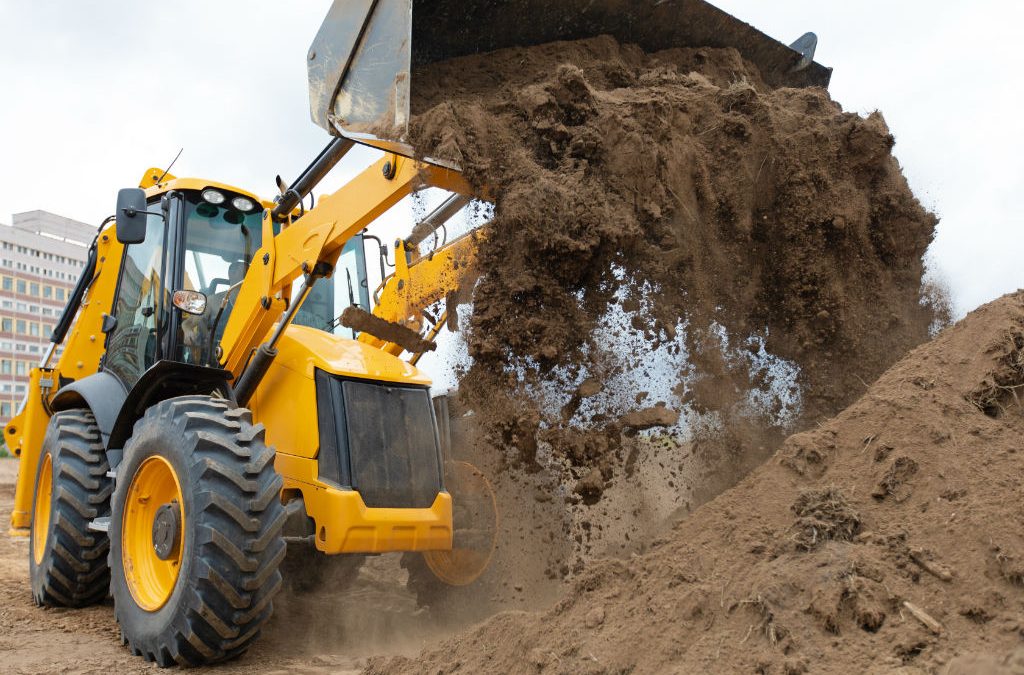
You see the term earthmoving Australia a lot when you plan a build or tender. It covers the work that shifts soil, rock, and debris so your project can start clean and safe. Think excavation, backfilling, site levelling, trenching and haulage using heavy machinery like excavators, bulldozers, graders and dump trucks.
In Australia, you rely on earthmoving for civil works, mining infrastructure and residential jobs. Skilled operators shape land, manage drainage, protect the environment and keep sites efficient. You get accurate cuts, stable foundations and safer access roads.
When we asked Jamie from Deadset Digging, a local Adelaide contractor, about what earthmoving really means on site, he highlighted the practical side that clients often miss.
“Most people think earthmoving is just about moving dirt, but it’s really about shaping the ground so the whole project stands the test of time. If you don’t get the pad level right, or if the drainage isn’t thought through, you’re setting up for cracked slabs or flooding down the track. We always tell clients the prep is what makes the finish. Good gear and a skilled operator can save weeks of headaches later.”
Jamie also pointed out how safety and compliance shape daily work.
“It’s not just about jumping in a digger and going for it. You’ve got to check services with BYDA, keep your SWMS up to date, and make sure your crew is signed off with the right VOCs. That’s what separates the cowboys from the proper operators. Clients should always ask for proof of those things before anyone starts digging.”
In this guide, you’ll learn what earthmoving involves, the gear you might need and how to choose the right contractor near you. You’ll get clear steps and tips so you can plan with confidence.
What is Earthmoving Australia?
Earthmoving in Australia means moving, shaping, and stabilising soil, rock, and aggregates across civil, mining, and residential projects. You engage specialist contractors to deliver excavation, backfilling, site levelling, trenching, and haulage that produce accurate cuts and safer access roads.
Core tasks:
- Excavate foundations, basements, and basins for buildings, roads, and dams.
- Backfill footings, service trenches, and retaining structures with compacted material.
- Level pads, verges, and car parks to design grades for access and drainage.
- Trench for water, sewer, power, and NBN conduits to service routes.
- Haul spoil, quarry products, and contaminated soils to approved locations.
- Compact subgrades, pavements, and embankments to specified density.
- Stabilise soft soils, reactive clays, and haul roads with lime or cement.
Specialised equipment:
- Deploy excavators, skid steers, and loaders for cuts and trims.
- Operate bulldozers, graders, and scrapers for bulk earthworks.
- Run articulated dump trucks, water carts, and tippers for haulage.
- Use padfoot rollers, smooth drum rollers, and plate compactors for compaction.
- Install GPS machine control, laser levels, and drones for survey verification.
Standards and compliance:
- Follow the Model WHS Act and Excavation Work Code of Practice for trenches, edges, and underground services, Safe Work Australia.
- Apply AS 3798 Guidelines on Earthworks for Commercial and Residential Developments for testing, compaction, and hold points, Standards Australia.
- Reference NCC performance requirements for site drainage and surface falls, Australian Building Codes Board.
- Use erosion and sediment controls per state EPA guidelines and IECA Best Practice, Environmental Protection Authorities and IECA Australasia.
- Lodge utility enquiries with Before You Dig Australia 1100 before any ground disturbance, BYDA.
- Maintain SWMS, White Cards, and VOC or RII competencies like RIIMPO320F for excavator operations, Australian Skills Quality Authority.
Australian context:
- Manage variable soils like sand, laterite, and reactive clay across coastal, arid, and tropical zones.
- Plan around heavy rainfall in tropical north, drought in inland regions, and bushfire recovery works.
- Coordinate remote logistics for quarries, fuel, and water in regional corridors.
- Protect cultural heritage places and native vegetation under state legislation.
- Deliver stable platforms, compliant compaction, and controlled drainage for long term performance.
- Reduce rework, delays, and cost risk through survey control and density testing.
- Improve site safety with clear haul routes, better compliance, and service locating.
Key Earthmoving machinery and its uses
This section maps the core plant to common earthmoving Australia tasks. You get clear use cases, selection cues, and compliance touchpoints.
Excavators, backhoes, and attachments
Excavators drive digging, trenching, and lifting across earthmoving Australia projects. Backhoes cover tight lots and mixed task days.
- Excavators: Choose 1.7-35 t units for trenches, pads, and rock, then match reach and tail swing to access limits.
- Backhoes: Pick 7-10 t machines for urban blocks, then use a loader bucket for backfill and rear hoe for services.
- Attachments: Fit buckets, rock breakers, augers, and compaction wheels, then swap quick hitches to cut idle time.
- Controls: Use 2D or 3D GPS to hit design levels, then verify cuts against design models for QA.
- Safety: Keep slew exclusion zones and spotters for lifts, then follow plant risk controls under the Model WHS laws [Safe Work Australia, 2023].
Key figures and use ranges
Machine | Common capacity | Typical dig depth | Typical tasks | Standards or sources |
|---|---|---|---|---|
| Mini excavator | 1.7-5 t | 2.2-3.5 m | Services, footings, landscaping | Manufacturer data, Safe Work Australia 2023 |
| Medium excavator | 13-25 t | 5.5-7.5 m | Bulk cuts, batters, rock | Manufacturer data |
| Backhoe loader | 7-10 t | 4.3-5.5 m | Utilities, rural driveways, small civil | Manufacturer data |
| GPS guidance | ±10-30 mm | n/a | Grade control, volume checks | AS 3798, OEM guidance |
Sources: Safe Work Australia Plant Code 2023, AS 3798:2007.
Bulldozers, loaders, and skid steers
Bulldozers push bulk material and shape batters. Loaders shift stockpiles and load haulage. Skid steers run attachments in constrained sites.
- Bulldozers: Select 10–35 t units for cuts, fills, and drains, then apply PAT blades to hold grade on short pushes.
- Loaders: Use 1.5–5.0 m³ buckets for load‑out and rehandling, then fit scales to track truck payloads.
- Skid steers: Deploy wheeled or tracked models for kerb prep, slab prep, and clean‑up, then run brooms and trenchers.
- Control: Enable slope assist or laser masts to trim pads, then confirm with survey checks on set outs.
- Safety: Maintain tip berms on stockpiles and ramps, then operate to traffic plans under WHS regs [Safe Work Australia, 2023].
Indicative capacities and roles
Machine | Operating weight | Blade or bucket | Primary role | Sources |
|---|---|---|---|---|
| Dozer D6 class | 20-22 t | 3.3-3.9 m³ blade | Cut to fill, batter shaping | Caterpillar data, Austroads 2023 |
| Wheel loader 966 class | 23-26 t | 3.2-4.2 m³ bucket | Load trucks, stockpile move | OEM data |
| Track skid steer | 3.5-5.5t | 0.4–0.6 m³ bucket | Tight access earthworks | OEM data |
Sources: OEM technical specs, Austroads Guide to Pavement Technology 2023, Safe Work Australia 2023.
Graders, scrapers, and compactors
Graders finish subgrades and pavements. Scrapers move bulk cut to fill over medium hauls. Compactors lock in density for long‑term performance.
- Graders: Use 12-15 ft blades for final trim on subgrade and basecourse, then run 3D control for ±10–20 mm tolerances.
- Scrapers: Run single or twin engines on 200-2,000 m hauls for efficient earthmoving Australia bulk shifts, then team with push dozers.
- Compactors: Match padfoot rollers to cohesive clays and smooth drums to granular gravels, then verify density to AS 3798.
- Testing: Target 95-100 percent MDD for structural layers under Level 1 supervision, then log nuclear gauge results for QA.
- Drainage: Cut crossfall and crown to plan to prevent ponding, then tie drains to lawful discharge points under local approvals.
Performance targets and guidance
Plant or metric | Typical spec | Application | Standard or source |
|---|---|---|---|
| Motor grade | 12-15 ft blade | Final trim, camber, crossfall | OEM data, Austroads 2023 |
| Open bowl scraper | 20-35 m³ | Bulk haul 0.2–2.0 km | OEM data |
| Padfoot roller | 10-20 t | Cohesive fill compaction | AS 3798:2007 |
| Density target | 95-100% MDD | Subgrade, subbase, base | AS 3798:2007 |
| Trim tolerance | ±10-20 mm | Pavement formation | Austroads 2023 |
Sources: AS 3798:2007 Guidelines on Earthworks, Austroads Guide to Pavement Technology 2023, Safe Work Australia 2023.
Applications across Australian industries
Earthmoving in Australia underpins project delivery across sectors. You apply tailored methods, machines, and controls to match terrain, climate, and compliance.
Construction and infrastructure
- Cutting building pads to tolerance for stable slabs, with 10 mm to 20 mm variance for Level 1 controlled fill under AS 3798, tested via AS 1289 compaction methods [Standards Australia AS 3798, AS 1289].
- Forming road subgrades and subbases for pavements, with 95% to 98% modified compaction targets set by project specs and verified by nuclear density gauges [Transport for NSW QA R44, Standards Australia AS 1289].
- Trenching service corridors for utilities, like water, gas, power, and NBN, with shoring and exclusion zones as per trenching codes [Safe Work Australia excavation guidance].
- Grading access roads for crane lifts and deliveries, with crossfall, camber, and drainage control for wet season resilience [Austroads Guide to Pavement Technology].
- Stabilising weak soils using lime or cement binders for bearing capacity gains, with mix design trials and field UCS checks [Austroads, Department of Transport and Main Roads QLD].
Mining and quarrying
- Stripping overburden to expose ore bodies, with haul road geometry, like 10% maximum grades and safety berms, aligned to haul fleet limits [Queensland Mining Safety and Health legislation, WA DMIRS guidance].
- Excavating blast patterns and loading run‑of‑mine material, with dig unit selection by bucket class and bench height for cycle time gains [Geoscience Australia Minerals].
- Building tailings embankments and sumps with controlled compaction and seepage controls, with surveillance under ANCOLD guidelines [ANCOLD tailings dam guidelines].
- Rehabilitating waste dumps with regrading, topsoiling, and seeding for closure plans approved by state regulators [NSW Resources Regulator mine rehabilitation].
Agriculture and land development
- Contouring paddocks and keyline ripping for erosion control and water harvesting on broadacre farms, with catchment mapping from LiDAR DEMs [Department of Agriculture, Fisheries and Forestry].
- Constructing farm dams and irrigation channels with cut-to-fill balance and spillway protection per rural works codes [NSW Department of Primary Industries water].
- Clearing windrows and forming access tracks for fencelines, sheds, and yards with fauna surveys where required by approvals [State environmental regulators].
- Subdividing greenfield estates with bulk earthworks, service trenches, and swales tied to MUSIC models for stormwater quality [Water Sensitive Urban Design guidelines].
Disaster recovery and environmental works
- Reopening access after floods and fires by clearing debris, reinstating batters, and backfilling scours under emergency works orders [Queensland Reconstruction Authority].
- Reprofiling creek banks and constructing rock armouring for erosion control with fish passage considerations under waterway permits [Department of Climate Change Energy the Environment and Water].
- Remediating contaminated soils by segregating stockpiles, tracking loads, and capping cells under site management plans [EPA state guidance].
- Managing cultural heritage during earthmoving in Australia responds with stop work protocols and registered monitors on site [Aboriginal and Torres Strait Islander Heritage Acts].
Regulations, standards, and safety in Australia
Earthmoving in Australia runs under a clear compliance stack that anchors risk, quality, and environmental duty. You meet legal duties by aligning plant, people, and processes with national and state instruments.
Licensing and operator competency
You operate earthmoving plants under competency-based controls, not a blanket high-risk licence, for most excavators, loaders, dozers, and graders. You verify capability through nationally recognised units and site VOCs.
- Hold: White Card CPCWHS1001 for all construction sites, including civil earthworks, per Safe Work Australia.
- Hold: Role-specific RTO units, for example, RIIMPO320F Excavator, RIIMPO323E Dozer, RIIMPO321F Loader, and maintain Statement of Attainment.
- Maintain: Plant operator VOCs every 24 months, or on new model introduction, under PCBU due diligence.
- Verify: Spotter accreditation for work near overhead or underground assets where state rules apply, for example, Energy Safe Victoria.
- Confirm: High Risk Work Licence where the plant qualifies, for example, forklifts LF, cranes CN, not typical for earthmoving plant, per WHS Regulations 2011.
- Record: Logbook hours, pre-start checks, and maintenance close-outs, then file under site QA.
Citations: Safe Work Australia, State regulators, Registered Training Organisations.
WHS requirements and site protocols
You manage earthmoving risks through the Model WHS Act, WHS Regulations 2011, and approved Codes of Practice.
- Implement: SWMS for high-risk construction work, for example, trenches over 1.5 m, mobile plant near traffic, excavation near services.
- Control: Underground service hits with Dial Before You Dig tickets, utility locates, non-destructive digging, and positive identification.
- Separate: People and plant with traffic management plans, physical barriers, and exclusion zones sized to swing radius and dump envelope.
- Stabilise: Excavation walls with benching, battering, or shoring, then verify by a competent person before entry.
- Manage: Plant condition with daily pre-starts, defect tagging, isolation locks, and service intervals per OEM.
- Monitor: Dust, noise, and vibration at source using water carts, enclosures, broadband alarms, and route planning.
- Embed: Fatigue controls in rostering, for example, max 12-hour shifts with verified breaks, under PCBU duty of care.
- Validate: Lifting with earthmoving plant via rated attachments, lifting points, and load charts, per plant-specific SOPs.
Citations: Safe Work Australia Codes of Practice, Consultation, SWMS, Excavation, Managing Risks of Plant.
Environmental compliance and cultural heritage
You plan earthmoving to meet federal and state environmental law, project approvals, and cultural heritage obligations.
- Protect: Water and soil with erosion and sediment controls, for example, silt fences, sediment basins, stabilised site access, per IECA best practice and state EPA guidance.
- Minimise: Clearing footprints by marking no-go zones, then stage topsoil strip and stockpile heights, and seed promptly to prevent dust and runoff.
- Control: Contaminated material with waste classification, tracking, and licensed disposal routes under the state Environment Protection Acts.
- Manage: Noise and hours per consent conditions and local laws, then log monitoring at receivers where required.
- Safeguard: Aboriginal cultural heritage with early surveys, heritage permits, and stop-work procedures on discovery, under state Aboriginal Heritage Acts and the EPBC Act 1999.
- Rehabilitate: Disturbed areas with backfilling, compaction to AS 3798, topsoil respread, and native species revegetation aligned to approval conditions.
Citations: Australian Government Department of Climate Change, Energy, the Environment and Water, State EPAs, IECA, AS 3798.
Instrument | Jurisdiction | Relevance to earthmoving | Source |
|---|---|---|---|
| Model WHS Act, WHS Regulations 2011 | National framework | Duties for PCBUs, plant, high-risk work, excavation controls | https://www.safeworkaustralia.gov.au |
| Codes of Practice, for example Excavation, Managing Risks of Plant | National guidance | Practical risk controls and SWMS triggers | https://www.safeworkaustralia.gov.au |
| AS 3798 Guidelines on Earthworks for Commercial and Residential Developments | Australian Standard | Compaction control, testing regimes, QA for fills | https://www.standards.org.au |
| Heavy Vehicle National Law 2012 | Multi-state | Chain of Responsibility for haulage, mass, fatigue, loading | https://www.nhvr.gov.au |
| EPBC Act 1999 | Commonwealth | Matters of National Environmental Significance and heritage | https://www.dcceew.gov.au |
| State Environment Protection Acts, for example NSW POEO Act 1997, VIC EP Act 2017 | State | Pollution control, noise, dust, waste transport and disposal | State EPA websites |
| Aboriginal Heritage Acts, for example NSW AH Act 2006, VIC Aboriginal Heritage Act 2006 | State | Survey, permits, and duty to stop on discovery | State heritage agencies |
| Dial Before You Dig referral | National service | Underground asset location and protection | https://www.beforeyoudig.com.au |
Choosing an Earthmoving contractor in Australia
Choose an earthmoving partner that proves capability, compliance, and control of risk in Australian conditions. Align scope, plant, and standards to secure accurate cuts, stable platforms, and clean drainage.
Assessing capability, fleet, and accreditation
- Verify project fit using past projects, for example, subdivisions, basements, pipelines, and flood recoveries.
- Verify technical depth across excavation, compaction, stabilisation, trenching, and haulage.
- Verify quality processes to AS 3798 Earthworks, ISO 9001 Quality, ISO 14001 Environment, ISO 45001 Safety.
- Verify operator competency with VOC records, RTO statements of attainment, and high-risk work licences, where applicable under the Model WHS Act.
- Verify plant range by class, for example, excavators 5 t, 14 t, 23 t, 35 t, dozers D6, D8, graders 12M, compactors 12 t padfoot.
- Verify technology capability, including 3D GPS machine control, UTS, and drone survey, if tight tolerances apply.
- Verify production capacity against required volumes if the bulk cut exceeds 10,000 m3.
- Verify testing regime for compaction to ≥95 percent MDD with LOT frequency to AS 3798 and project specs.
- Verify environmental controls for erosion, sediment, noise, heritage, under state EP Acts and Aboriginal heritage laws.
- Verify insurances with current certificates, for example, public liability AUD 20m, plant and equipment, and workers’ compensation.
- Verify traffic and service protection methods, for example, DBYD response, vacuum potholing, spotters, isolation, under WHS Regulations.
- Verify subcontract chain transparency, if critical works include piling platforms, soft ground treatment, or contaminated spoil.
Cost factors, quotes, and project timelines
Anchor pricing and time to measurable quantities, methods, and risks, if the site presents variable soils or service density.
- Compare pricing structure by task, for example, bulk earthworks, detailed trimming, trenching, cart to tip,and stabilisation.
- Compare production rates by plant class and soil, for example, excavator 20 t in clay, scraper set on long hauls.
- Compare inclusions for survey setout, 3D models, SWMS, testing, traffic control,and environmental measures.
- Compare disposal pathways by spoil type, for example, VENM, ENM, GSW, asbestos impacted, under state waste classifications.
- Compare programme logic with weather allowance, float, sequencing for services, drainage, and proof rolling.
- Compare payment terms, for example, schedule of rates, lump sum with rise and fall, milestone claims, and retention.
- Compare risks carried, for example, rock excavation, groundwater, latent services, and restricted access.
Item | Typical Value or Range | Standard or Source |
|---|---|---|
| Quote validity | 14 to 30 days | Common commercial practice |
| Mobilisation window | 1 to 3 days metro, 3 to 7 days regional | Contractor logistics |
| Excavation tolerance | ±20 mm to ±50 mm | AS 3798, project specs |
| Compaction target | ≥95% MDD general, ≥98% MDD pavements | AS 3798, road agency specs |
| Testing frequency | 1 LOT per 500 m3 to 1,000 m3 | AS 3798 guidance |
| GPS machine control accuracy | ±10 mm vertical, ±15 mm horizontal | OEM specs, survey control quality |
| SWMS lead time | 1 to 2 days before high risk work | Model WHS Regulations |
| Public liability insurance | AUD 10m to AUD 20m | Industry norm, contract conditions |
| Wet weather allowance | 10% to 20% programme float | Risk allowance by contractor |
- Set milestones across enabling works, bulk cut, services trenching, backfill, trimming, proof rolling, and if the critical path depends on drainage installation.
- Lock haul routes and disposal sites with booking caps if cart distances exceed 20 km.
- Fix rate adjustments to rock, dewatering, and contaminated spoil via defined clauses if geotech or waste reports carry uncertainty.
- Align hold points to testing and survey, for example, subgrade acceptance and density results, under AS 3798 and principal ITPs.
- Track earned quantities weekly via survey, tickets, and test reports, if payment claims rely on verified m3 and passes.
Emerging trends and sustainability
Australian earthmoving now blends digital workflows and low‑impact methods to cut rework and emissions. You gain tighter control of cost, time, and quality across design, field, and handover.
GPS machine control, BIM, and telematics
Digital control boosts accuracy and productivity across earthmoving Australia projects, then anchors verification to open standards.
- Deploy GNSS machine control on excavators, dozers, and graders, for example, 20-30 mm vertical RTK on final trims, using AUSCORS corrections from Geoscience Australia
- Integrate BIM models with federated surfaces, corridors, and utilities, for example, IFC 4.3 alignments, under an ISO 19650 common data environment for version control
- Track production with ISO 15143‑3 telematics feeds for fuel, idle, and cycle counts, for example, mixed fleets from different OEMs
- Verify as‑built surfaces with rover GNSS and total station scans, for example, stockpile volumes and subgrade conformance to AS 3798 test lots
- Automate QA by pushing design updates to cabs, for example, grade limits, exclusion zones, and utility clearances linked to SWMS
Citations: Geoscience Australia AUSCORS; ISO 19650; ISO 15143‑3.
Low-emission equipment and circular practices
Low‑emission plant and circular materials cut project footprints while meeting client targets on infrastructure and subdivision works.
- Select engines at US EPA Tier 4 Final or EU Stage V where available, for example, hire fleets on major road projects, to reduce NOx and PM per TfNSW and ISC expectations
- Switch fuels with verified supply, for example, renewable diesel, HVO or B20 biodiesel compliant with Australia’s Fuel Quality Standards under DCCEEW
- Right‑size plant and control idle via telematics geofences and auto‑shutdown, for example, 15 min idle limits on loaders and dump trucks
- Electrify compact classes where duty cycles fit, for example, 2–5 t excavators for services trenching near hospitals to limit noise and fumes
- Close material loops with recycled inputs, for example, recycled crushed concrete and reclaimed asphalt pavement under Austroads specifications, and on‑site crushing for Class 2–4 subbase
- Stabilise weak soils with binders that cut clinker content, for example, slag‑blend cement or foamed bitumen per Austroads Guide to Pavement Technology
Citations: DCCEEW Fuel Quality Standards; Infrastructure Sustainability Council; Austroads.
Metric | Value | Context | Source |
|---|---|---|---|
| RTK GNSS vertical accuracy | 20–30 mm | Machine control trimming | Geoscience Australia AUSCORS |
| Diesel CO2‑e factor | 2.68 kg CO2‑e/L | Scope 1 combustion accounting | National Greenhouse Accounts Factors 2024, DCCEEW |
| C&D waste recovery rate | 78% | Australia 2020–21 recovery performance | National Waste Report 2022, DCCEEW |
These practices align with the Model WHS Act duty to manage risk, the AS 3798 framework for earthworks quality, and client IS Rating requirements on fuel tracking and material circularity, then support consistent outcomes on earthmoving Australia jobs across civil, mining, and residential scopes.
Conclusion
You now have the context to plan earthmoving with purpose and control. Set clear outcomes for stability, drainage, and productivity. Lock in scope tolerances and handover criteria. Build a realistic programme with float for weather and services. Keep a live risk register and align it with cost and quality.
Bring your team together early. Confirm ground information and access needs. Agree on survey and test hold points. Track production daily and adjust the plant and sequence fast. Capture records and photos so claims and sign-offs stay simple.
Take the next step with a brief that states goals, methods, evidence and timelines. With disciplined planning and the right partner, you’ll deliver safe, efficient and durable results.
Frequently Asked Questions
What is earthmoving in Australia?
Earthmoving is the process of shaping and stabilising land for construction, mining, agriculture, and recovery works. It includes excavation, backfilling, site levelling, trenching, haulage, grading, and compaction. Projects use heavy machinery like excavators, bulldozers, graders, loaders, and compactors, often guided by GPS for accuracy. Skilled operators manage drainage, subgrades, and access, ensuring safety and efficiency.
Which core earthmoving tasks are most common?
Common tasks include excavating foundations, backfilling service trenches, levelling pads, trenching for utilities, hauling materials, grading roads, compacting subgrades, and stabilising soft soils. These activities support civil works, mining operations, housing sites, and farm infrastructure. Precision and quality control are enhanced with GPS machine control, survey checks, and the right attachments.
What machinery is typically used?
Typical machinery includes excavators, backhoes, bulldozers, loaders, skid steers, graders, scrapers, rollers, and compactors. Attachments like buckets, rock breakers, rippers, augers, compaction wheels, and GPS systems increase versatility. Selection depends on soil type, access, cut–fill volumes, tolerance requirements, and productivity targets.
How does GPS machine control help?
GPS machine control provides real-time guidance for accurate cuts, levels, and grades. It reduces rework, improves production rates, and supports survey verification and as-built records. Integrated with BIM and telematics, it enhances quality assurance, fuel efficiency, and compliance documentation across civil and mining sites.
What standards apply to earthmoving in Australia?
Key references include the Model WHS Act and Regulations, AS 3798 (Earthworks), state Codes of Practice, and environmental and planning approvals. Projects may also require erosion and sediment control plans, noise management, traffic management, and cultural heritage permits. Site-specific SWMS are mandatory for high-risk work.
Do operators need licences or tickets?
Yes. Operators generally need relevant high-risk work licences or competency tickets (e.g., for excavators, skid steers, and rollers), plus VOCs and up-to-date training. Some sites require construction induction (White Card), rail or mine inductions, and proof of competency with GPS technology and attachments.
How is safety managed on-site?
Safety relies on SWMS, pre-starts, service locating (DBYD/1100), exclusion zones, spotters, load restraint, and traffic management. Controls address underground utility strikes, working near edges, plant–people separation, weather impacts, and machine rollovers. Daily inspections and maintenance keep equipment compliant and reliable.
What about environmental and cultural heritage compliance?
Projects must control erosion, sediment, dust, noise, and runoff, protect waterways, and manage waste and fuels. Cultural heritage processes safeguard Aboriginal and historical sites via surveys, approvals, and stop-work protocols. Compliance is monitored with inspection records, environmental plans, and incident reporting.
How do soil and weather affect earthmoving?
Variable soils require tailored methods: ripping or stabilisation for hard or weak ground, moisture conditioning, and layer-by-layer compaction. Extreme weather – heat, storms, and flooding – demands scheduling around rainfall, resilient drainage, and safe access planning. Contingency allowances reduce delays and quality risks.
How do I choose the right earthmoving contractor?
Check capability, relevant projects, fleet suitability, GPS and QA processes, operator competency, and safety record. Verify licences, insurances, and compliance with AS 3798 and WHS. Compare quotes on production rates, methodologies, risk allowances, environmental controls, and timelines – not just hourly rates.
What does earthmoving usually cost?
Costs depend on scope, volumes, access, soil conditions, disposal or reuse of spoil, machine selection, and required tolerances. Pricing can be hourly, lump sum, or a schedule of rates. GPS and good planning often reduce rework and total cost. Ask for assumptions, exclusions, and contingency provisions.
How long will earthworks take?
Duration depends on cut-fill volumes, haul distances, weather, traffic management, and compaction targets. Clear designs, early service locating, and GPS control shorten timelines. Programme buffers for rain, plant availability, and approvals help avoid delays.
What attachments improve productivity?
High-value attachments include tilt hitches, rock breakers, rippers, grading beams, compaction wheels, sweepers, forks, and augers. They speed trenching, finishing, compaction, and material handling. Pair attachments with machine size, soil type, and tolerance requirements for best results.
Where is earthmoving used beyond construction?
It’s vital in mining (stripping overburden, haul roads, rehab), agriculture (contouring, farm pads, irrigation channels), and disaster recovery (access, debris removal, remediation). Each context has specific safety, environmental, and compliance requirements.
What emerging trends should I know about?
Trends include GPS machine control, BIM-enabled workflows, telematics, low-emission equipment, renewable fuels, hybrid/EV plant, and circular practices like recycled materials. These improve accuracy, cut costs and emissions, and help meet client sustainability targets.
How do I ensure quality and compliance on my project?
Use a contractor with documented ITPs, survey verification, density testing, moisture control, and as-built records. Align methods with AS 3798, WHS, and environmental approvals. Require regular reporting, calibration certificates, and clear hold points before covering up work.
Related posts:
 8 Big Questions About Electrical Compliance Certificate
 5 Safety Tips For Using Gas Heating In Winter
 Cutting And Safety Tips For Wet Cut Concrete Sawing
 Getting Your Electrical Compliance Certificate QLD Step-By-Step
 Your Essential Guide To Smoke Alarm Regulations Victoria
 The Ultimate Guide: How To Connect A Backup Generator To Your House