
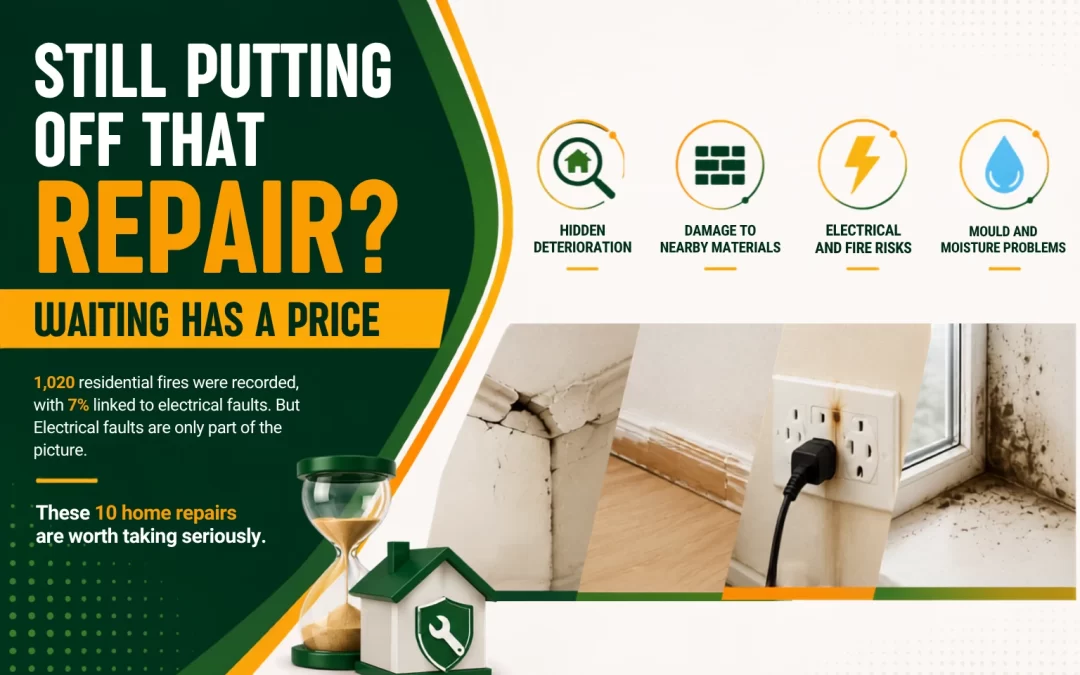
Did you fix that cracked power point yet?
Probably not. It still works, so it can wait, right?
Between 1 June and 31 August 2025, NSW recorded 1,020 residential fires, with 7% attributed to electrical faults. Another 48% were linked to human activity, including overloaded power boards. Australian electrical safety guidance also warns that damaged power points are dangerous and should be replaced by a licensed electrical contractor.
Home repairs are a regular part of owning a property. In one Australian survey, 47% of households had repairs or maintenance carried out within the previous 12 months, with plumbing, electrical work and roof repairs among the most common jobs.
Knowing which repairs can wait and which need attention can help you prioritise work around your home. This guide covers 10 repairs that can help you keep your home safe, avoid unnecessary repair costs and when it’s time to get a problem checked.
How Can Delayed Repairs Affect Your Home?
If you spot damage around your home and leave it for later, you can miss the chance to deal with it while it’s still limited to one area. As the problem develops, finding the cause and working out what needs to be repaired can become more difficult. Delaying repairs can lead to:
→ Hidden deterioration
→ Damage to nearby materials
→ Reduced structural performance
→ Electrical and fire risks
→ Mould and moisture problems
If something keeps getting worse or affecting another part of the house, don’t keep patching it. These 10 common faults are worth taking seriously.
#1 Leaking Roof
Repeated water entry can damage insulation, plasterboard and timber inside the roof. If the leak continues, damp materials can also create conditions for mould and timber decay.
Check the roof space while it’s raining, as long as you can access it safely. Find the drip, stain or damp insulation, then follow the water marks upwards to locate where the water is coming in. Once you find it, the repair will depend on what has failed.
| Roof Problem | How to Fix It |
| Cracked tiles or damaged ridging | Replace damaged tiles or ridge components. |
| Loose fixings, failed flashing or gaps | Secure, repair or reseal the affected area. |
| Rusted or deteriorated metal roofing | Repair minor damage or replace affected sheets. |
After stopping the leak, check any insulation, timber and plasterboard that got wet. Allow wet materials to dry properly and replace anything that has deteriorated or cannot be dried.
#2 Growing Wall Cracks
Growing cracks can point to footing movement caused by settlement, poor drainage or uneven ground movement in reactive clay soils. If that movement continues, simply filling and repainting the crack won’t fix the cause. Check for:
→ Several new cracks appearing the same spot
→ Doors or windows starting to stick
→ Gaps developing around door or window frames
→ Plumbing leaks or poor drainage outside
→ Water pooling near the footings
If the crack is cosmetic and there’s no ongoing movement, it can be filled and refinished. If the footings are moving, the cause needs to be dealt with first. That can involve correcting drainage, stabilising soil conditions or, in more serious cases, underpinning or piering the foundations.
Repair the wall only after the underlying movement has been addressed. Otherwise, there’s a good chance the crack will open up again.
#3 Leaking Pipes and Fixtures
Ongoing moisture can damage plasterboard, cabinetry, flooring and timber, and lead to mould inside the walls. Check exposed pipes, connections and fixtures for drips, corrosion or dampness. If you suspect a hidden leak, turn off the taps and any water-using appliances, then check your water meter for unexplained movement.
Once you find the leak, replace worn washers or seals, fix leaking connections, and repair or replace damaged pipes and fixtures. If water is leaking from around the shower, check the plumbing, seals and waterproofing to find the source.Dry the area and check nearby plasterboard, cabinetry, flooring and timber for damage. Replace any materials that are swollen, soft, mouldy or deteriorated.
#4 Damaged Power Points and Switches
Damage can expose live electrical parts and put you at risk of electric shock or fire. Don’t remove the cover or inspect the wiring behind it. Even when the switch is off, live wires can still be connected to the fitting. Stop using it if you notice:
→ Discolouration or signs of overheating
→ Buzzing or unusual sounds
→ A burning smell
→ Safety switches repeatedly tripping
→ Shocks or tingling sensations
Damaged power points and switches need to be replaced by a licensed electrician. Keep the affected fitting out of use until it has been checked and the fault repaired.
#5 Water Pooling Around the House
Water around the footings can change the moisture level in the soil. On reactive clay sites, this can cause the ground to swell and shrink, contributing to footing movement and cracking.
Clear blocked drains, repair damaged stormwater lines and check that your downpipes are connected and draining properly. If your paving or ground levels send water towards the house, add surface drainage to direct it away from the footings. If you have a subfloor, keep the vents clear and check that water isn’t collecting underneath.
Once you’ve sorted out the drainage, check any areas that stayed damp for mould, timber decay or other water damage.
#6 Persistent Mould Growth
Moisture can stay hidden inside walls, ceilings and floors, where it can damage building materials before you see the full extent of the problem. Check these common areas:
| Where to Check | What to Look For |
| Bathrooms, laundries and kitchens | Condensation, poor ventilation |
| Windows, external walls and wardrobes | Damp surfaces, condensation or mould returning in the same spot |
| Ceilings and rooms next to showers | Roof leaks, plumbing leaks or failed waterproofing |
| Under floors and inside wall cavities | Dampness, musty smells or signs of hidden moisture |
“We’ve come across mould problems where ventilation wasn’t the issue at all. Once we checked further, we found a leak that was causing the moisture.”- Newcastle Plumber from Fluid Plumbing, Electrical & Air Conditioning
To stop mould from coming back, repair any leaks or failed waterproofing and address condensation where it’s forming. Once you’ve fixed the moisture problem, clean the mould and let the area dry properly.
#7 Overflowing Gutters
Overflowing gutters can cause damp and direct too much water towards the footings. Check your gutters during or just after rain to see where water is backing up.
Remove leaves and debris from the gutters and around the downpipe openings. Run water through the gutter and check that it reaches the outlet without backing up or sitting in low spots. If water keeps sitting in one section, the gutter can be sagging or have inadequate fall towards the outlet. Repair loose brackets and leaking joints, and replace sections that are badly damaged.
If you live in a bushfire-prone area, don’t let dry leaves build up in your gutters. Keeping gutters clear of leaf litter also reduces combustible material around the roofline.
#8 Sticking Doors and Windows
If several doors or windows start sticking at the same time and you’re also seeing new cracks, your house could be experiencing movement. Check around the frames for cracking and look outside for water pooling or drainage problems near the footings.
If only one door is sticking, check the hinges, alignment and timber for swelling. Tightening the hinges or adjusting the door can fix a local problem. If several openings are affected, check for footing movement, poor drainage or changing soil conditions before trimming doors or adjusting frames.
#9 Overheating Dryer
If your dryer is taking longer to dry clothes or getting unusually hot, don’t keep running another cycle. A blocked lint filter can restrict airflow and contribute to overheating. Stop using the dryer if:
→ There’s a burning smell
→ Airflow from the vent is weak
→ Lint is building up excessively
→ Dryer keeps stopping during a cycle
If the dryer keeps overheating, stop using it. There could be a fault inside the appliance that needs to be checked by a qualified appliance technician.
#10 Termite Damage
More than 100,000 Australian homes are affected by termite attack each year, and repairs can range from a few thousand dollars to tens of thousands depending on the extent of the damage.
Look for hollow-sounding timber, damaged skirting boards or door frames, soft flooring, and timber that appears weakened or deteriorated.
If you find signs of termites, don’t pull damaged timber apart or spray the area. Have a termite inspection carried out first to confirm if termites are active, locate entry points and check how much damage has been done.
Checklist for Routine Home Maintenance
A regular maintenance schedule can help you pick up problems early and keep the main parts of your home in good condition. Use this checklist throughout the year:
| Maintenance Schedule | Areas to Inspect |
| Every month | Test smoke alarms using the test button. |
| Every 3–4 months | Check gutters and clear leaves, twigs and other debris, especially before periods of heavy rain. |
| Every 6 months | Vacuum dust from your smoke alarms. |
| Every year | Check water supply and drainage pipes for leaks or corrosion, inspect the roof and overhanging branches, arrange a termite inspection, and service heating and cooling systems as required. |
| After heavy rain or storms | Check for roof leaks, overflowing gutters, pooling water and storm damage. |
| During regular use | Clean the dryer lint filter every load and act on new leaks, cracks, mould or electrical damage as soon as they appear. |
Simple maintenance and minor cosmetic repairs can be DIY jobs, but electrical, plumbing, gas and structural work should be left to qualified or licensed trades.
Stay Ahead of Repairs With Regular Home Checks
Your home is one of your biggest investments, so look after it by dealing with repairs properly. Regular checks help you keep track of its condition and decide which work needs urgent attention. Set aside time throughout the year to inspect your property and organise repairs when needed. Keeping up with this routine will make managing your home easier over time.
Related posts:
 Do You Need a Plumber Or Electrician for Hot Water Repairs?
 8 Steps For Preparing Your Home For The Aussie Winter
 Can You Really Create Your Own French Drain At Home?
 Easy Maintenance Habits That Protect Your Home Long Term
 Watch These Signs Of Termites Activity In your Home
 5 Tips to Extend The Life Of Your Home’s Electrical System