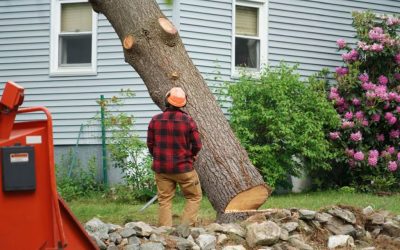
If you’ve just had a tree taken down and you’re staring at that stubborn stump left behind, you’re probably wondering about the stump grinding cost before you even think about calling anyone. And fair enough – it’s the first question everyone asks, and it’s a reasonable one to want answered before you start ringing around.
What even is stump grinding?
But first, quickly, what actually is stump grinding?
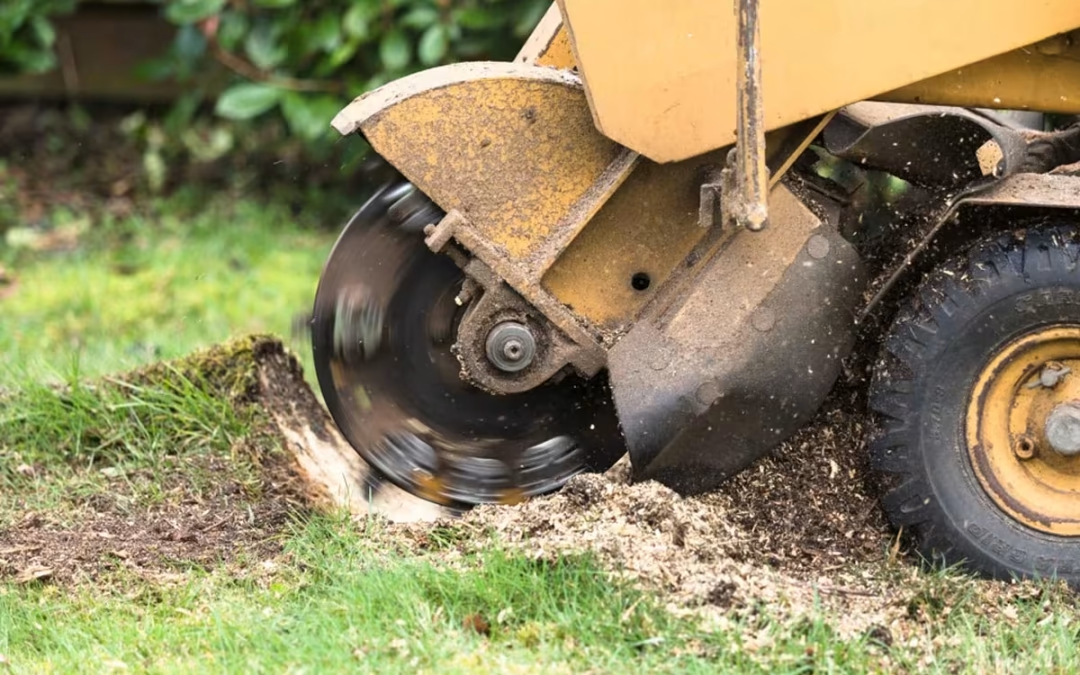
It’s exactly what it sounds like: a machine with a rotating cutting wheel grinds the stump down below ground level, chewing it into wood chips rather than ripping the whole root ball out of the ground.
Compared to full stump removal, it’s:
- Faster
- Less disruptive to your yard
- A lot cheaper.
So it’s no surprise that most homeowners are going the route of stump grinding these days.
So, how much does stump grinding cost?
Here’s the honest, ballpark answer:
For a pretty average backyard stump, in a pretty average spot, you’re probably looking at somewhere in the low-to-mid hundreds. That’s it, that’s the rough figure.
It’s genuinely hard to be more specific than that upfront, because the cost of stump grinding swings around a fair bit depending on what’s actually involved – which we’ll get into next.
What actually moves the price up or down?
There’s no single flat rate for the tree stump grinding cost, because every stump is a slightly different job. Here’s what tends to shift the number, roughly, in either direction:
1. Stump size
This is the big one. A small stump from a young tree or a shrub is going to cost noticeably less than grinding down something from a mature backyard gum.
That bigger diameter means:
- More grinding time
- More wear on the equipment
- A higher price.
Basically, the machine just has to make far more passes to get through a wide, established trunk.
2. Tree species
Hardwood stumps take longer to grind through than softer timber. Something like an ironbark or turpentine stump is genuinely tougher going than a palm or a soft ornamental species, and that extra time and effort usually shows up in the price.
3. Access to the stump
A stump sitting out in the open front yard is an easy job.
But is your stump:
- Wedged behind a fence?
- Down a narrow side path?
- In a tight backyard corner?
That’s a different story, since it might mean smaller equipment, more manual work, or just more time on site. Tighter access nudges the price up, full stop.
4. Root spread
Some stumps have surface roots running well beyond the trunk itself, and if you want those ground down flat too rather than just the stump, that’s more area to cover.
A stump with a big flared root system generally costs more than a clean, contained one, simply because there’s more material to work through before the job’s actually finished.
5. Number of stumps
If you’ve got more than one stump needing attention, most tradies will offer a better rate per stump once they’re already on site with the gear set up. Multiple stumps in one visit is usually cheaper per stump than booking separate jobs.
6. Underground obstacles
These all slow the job down:
- Old concrete
- Buried bricks & rocks
- Nearby pipes and cables.
7. Location & travel
Where you are matters too. Areas with more competition among local arborists tend to have more competitive pricing, while properties further out from the main service area might attract a bit extra for travel time.
8. Extra cleanup or treatment
Do you think your job might include:
- Hauling away the wood chip debris?
- Treating the stump to speed up decay?
- Levelling the site afterward?
These are often optional extras rather than part of a base price, so the total cost for stump grinding can shift depending on what you actually want done, not just the grinding itself.
Should you just DIY it?
It’s tempting! Hire a machine for the weekend and save some cash, right? But it’s also worth doing the maths first.
Because all of these add up:
- Machine hire
- Trailer delivery
- Fuel.
Not just that, factor in all the inevitable extra time a first-timer takes to get their head around a job like this. And remember, stump grinders are seriously dangerous pieces of equipment if you haven’t used one before, with flying debris and kickback actual, real risks.
For one or two stumps, a professional often ends up costing about the same as DIY once you’ve tallied everything, minus the risk to you, your property, or a very unlucky window. And that’s before factoring in the time you’ll spend figuring out a machine you’ve never used, versus someone who does this every day.
Get a real number, not a guess
Look, all of the above gives you a decent feel for what pushes stump grinding cost up or down – but nothing beats an actual quote from someone who’s looked at your actual stump. Size, species, access, and what’s underneath your yard are all things a real arborist needs to see in person to price properly.
That’s exactly where we come in. Pop your details into Tradie Near Me, and we’ll connect you with a highly rated, licensed local arborist who can give you a genuine, no-obligation quote based on your specific situation – not a rough internet average. It’s free, it’s fast, and it means you’re comparing real numbers instead of guessing at what your particular stump might set you back.