Replacing a hot water system is one of those decisions that feels more complicated than it should be. Gas vs electric hot water? Tank or instant? And what about heat pumps? The options multiply quickly, and most people just want someone to walk them through it clearly so they can make a confident call.
That’s what this guide does. Work through the steps in order and by the end you’ll have a strong sense of which direction is right for:
- Your particular home
- Your particular household
- Your particular budget.
Step 1: What’s already at your property?
Before anything else, this step narrows your options significantly. Do you have natural gas connected to your home? A local plumber can also check what connections are already available at your property and whether gas, electric, or heat pump installation is the most practical option.
If yes, a gas hot water system is straightforward to install and likely the most cost-effective path if you’re replacing an existing gas unit.
If you’re not on mains gas, you have two choices:
- Connect to the gas network if it’s available in your street
- Use LPG (bottled gas).
LPG is more expensive to run than mains gas – often significantly so – and changes the economics of the gas vs electric hot water debate considerably.
If there’s no gas at your property and no easy access to the network, you’re almost certainly looking at electric. That’s not a bad outcome – modern electric systems have come a long way, and one option in particular (the heat pump) has changed the conversation entirely.
Step 2: Understand the systems available to you
Gas Systems
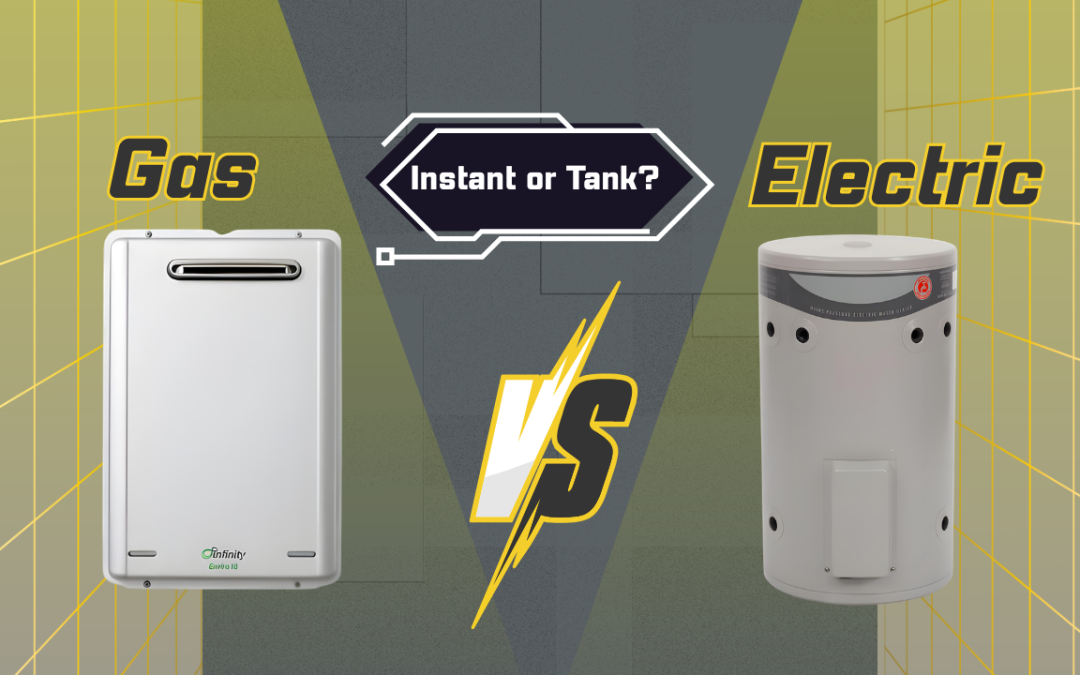
Gas hot water comes in two main forms:
- A storage tank heats and holds a volume of water – typically 135 to 360 litres – ready for use. It’s reliable and familiar, but it does use energy to keep that water hot around the clock, even when you’re not using it.
- An instantaneous gas system – also called continuous flow – heats water on demand as it passes through the unit. No tank, no stored water, no standby heat loss.
For the gas hot water system vs electric tank comparison, instantaneous gas is generally more energy efficient and suits households with variable or high demand well.
Electric Systems
Standard electric storage tanks are the most common hot water system in Australia. They’re cheap to buy and install, but more expensive to run than gas at standard tariffs – unless you’re on a controlled load (off-peak) tariff, which allows the system to heat water during cheaper overnight periods and significantly improves the running cost picture.
Heat pumps are the category that’s changed things most. A heat pump works like a reverse air conditioner – it extracts heat from the surrounding air and uses it to heat water, rather than generating heat directly. This makes them two to three times more efficient than a standard electric element.
For the electric vs gas hot water system comparison in 2026, a heat pump running on a standard tariff often beats both standard electric and mains gas on running costs. They cost more upfront but the savings accumulate quickly.
Step 3: Compare running costs for your situation
This is where gas vs electric hot water running costs come into focus – and here’s what really matters:
- Your location
- Your tariff
- Your usage pattern.
On mains gas with a continuous flow system, a typical household spends roughly $300-$500 per year on hot water. On a standard electricity tariff with a storage tank, that figure climbs to $600- $900.
On a controlled load tariff, electric storage drops to roughly $400-$600. A heat pump on a standard tariff sits at approximately $200-$400 per year – often the cheapest of all options to run.
LPG changes the gas calculation entirely. LPG running costs are typically two to three times higher than mains gas, which can make even a standard electric system look attractive by comparison.
- Are you on mains gas and replacing a gas unit? Staying with gas is usually the path of least resistance and reasonable running cost.
- Are you only on electric – or switching? A heat pump is worth serious consideration.
Step 4: Consider the gas vs electric upfront cost
Running costs are only part of the picture. Here’s a rough guide to installed costs for a gas vs electric hot water heater:
Standard electric storage: $900-$1,800 installed
Continuous flow gas: $1,200-$2,500 installed
Gas storage tank: $1,000-$2,000 installed
Heat pump: $2,500-$4,500 installed (federal rebates may apply)
LPG continuous flow: $1,500-$3,000 installed plus ongoing gas costs.
Heat pumps carry the highest upfront cost but the lowest running costs. For households planning to stay in their home for five or more years, the payback period is generally 4-6 years – after which the savings are ongoing.
Step 5: Think about instantaneous gas vs electric hot water
The gas hot water vs electric hot water debate gets most interesting when you compare continuous flow gas to heat pump electric head-to-head – because these are the two premium options in each category.
- Instantaneous gas is excellent for larger households with high simultaneous demand – multiple showers running at once, for example. Flow rate is essentially unlimited as long as the gas supply is consistent.
- Heat pumps use a storage tank, so very high simultaneous demand requires correct sizing. For most households, a correctly sized heat pump tank handles demand comfortably. The trade-off is upfront cost vs running cost, and for most households, the heat pump wins on the long-term numbers.
Step 6: Factor in where things are heading
The electric vs gas hot water system question also has a forward-looking dimension. Gas network costs are rising as fewer households remain connected. Feed-in tariffs have dropped, making solar self-consumption more valuable – and a heat pump running during the day on excess solar electricity can bring your hot water cost close to zero.
Gas, by contrast, doesn’t benefit from rooftop solar at all.
If you have solar or are considering it, an electric heat pump becomes an even stronger long-term proposition.
So … Gas or electric?
Here’s a simple summary based on your situation:
On Mains Gas, Replacing A Gas System?: Stay with gas continuous flow unless you have solar, in which case a heat pump is worth the switch.
On LPG?: Electric is almost certainly cheaper to run. A heat pump is the best long-term choice.
No Gas, On Electric Tariff?: Heat pump is the standout option. Standard electric with controlled load is the budget-friendly alternative.
High Simultaneous Demand Household?: Continuous flow gas handles peak demand most easily.
Solar Panels Installed? Heat pump wins – run it during the day on your own generation and the running cost drops dramatically.
Tradie Near Me connects Australian homeowners with licensed, experienced hot water system installers across Sydney, Melbourne, Brisbane, Perth, Adelaide, and the Gold Coast. Whether you’re going gas or electric, get an obligation-free quote from a local tradie who can assess your property and recommend the right system for your situation.