
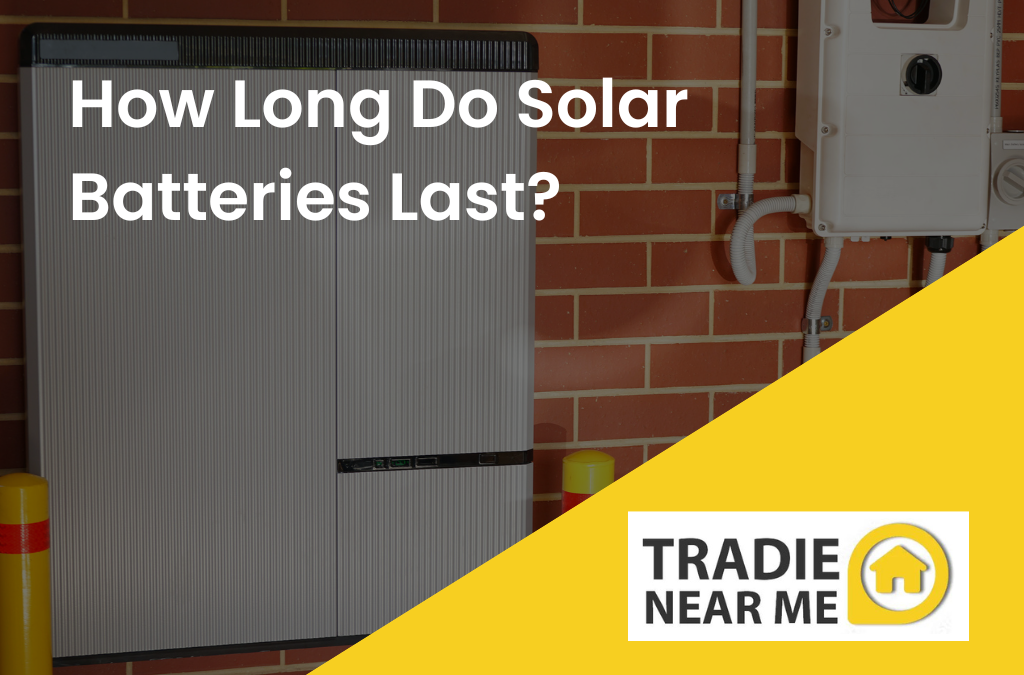
We know you’re here for a simple reason: to get a simple answer to your question ‘How long do solar batteries last?’ So let’s be totally direct and answer it as simply as possible:
For a quality lithium-based system installed in an Australian home in 2026, you’re looking at 10 to 15 years of solid performance.
You’ll find, though, that some systems push beyond that under the right conditions – while others fall short. So the real, honest answer – as with most things worth spending money on – is that the number on the box is only part of the story.
You also know exactly why this matters so much right now. Electricity prices in Australia – like prices across the board – aren’t going down in a hurry. The Cheaper Home Batteries federal rebate on battery storage – currently worth around $372 per usable kilowatt-hour – is running until 2030 but steps down annually. And a battery that lasts 15 years and performs well throughout is a fundamentally different financial proposition to one that degrades quickly and underdelivers for the last five, right?
That makes understanding solar battery lifespan not just a technical curiosity – it’s the difference between a great investment and an expensive lesson.
What the warranty number doesn’t tell you
The 10-15 year solar battery lifespan figure assumes a quality lithium battery – specifically LFP (lithium iron phosphate) chemistry, which has become the Australian market standard for good reason.
- It handles daily cycling well
- Performs better in heat than older lithium chemistries
- Has a strong safety record.
Older lead-acid batteries have a shorter lifespan and lower usable capacity – so if you’re looking at one of those, the numbers change significantly.
Also bear this in mind: Warranties give you a useful reference point, but read them carefully. Most cover 10 years or a set number of cycles – often 6,000 to 10,000 – whichever comes first. They typically guarantee around 60-70% of original capacity remaining at the end of the warranty period. That means your battery will still work after a decade – it just won’t hold quite as much as it did on day one. That’s normal, expected, and built into the warranty terms.
And when people ask how long do solar panel batteries last in Australia specifically, the local climate adds a layer of complexity. Because as we all know, Australia is a tough environment. And it’s especially tough for batteries – heat is the enemy of lithium chemistry, and a battery mounted in a poorly ventilated spot on a north-facing wall in Queensland ages differently to one in a cool, shaded garage in Melbourne. Where and how the battery is installed matters as much as the brand name on the front.
And if you’re here asking how long do Tesla solar batteries last – the Powerwall 3 carries a 10-year warranty with guaranteed performance retention, and real-world data from earlier Powerwall generations suggests many units perform well beyond the warranty period when installed correctly. But Tesla, although a premium brand, isn’t an outlier here – most quality brands tell a similar story.
How to make your battery last longer
Now let’s get a little more practical. We’ve put together the 6 really important factors that are within your control – and each one genuinely moves the dial on how long solar batteries last in Australia for your specific system.
1. Get the size right from the start
Two things to understand upfront:
- An undersized battery that’s pushed to its limits every single day will wear faster than a correctly sized one cycling comfortably.
- An oversized battery sitting largely unused isn’t giving you value.
The right size for your household’s actual consumption pattern is the starting point for a long, productive battery life. This isn’t a set-and-forget decision – it’s worth doing properly with someone who understands your usage profile.
2. Watch your depth of discharge
Every time your battery charges and discharges, it completes a cycle. Consistently draining it to near zero puts significantly more stress on the cells than cycling it to 80-90% discharge.
Most modern battery management systems handle this automatically – but it’s worth understanding that a battery run hard every day is burning through its cycle count faster than one managed intelligently.
3. Installation location is not cosmetic
Heat is the single biggest accelerant of battery degradation.
Is your battery mounted:
- In direct sunlight?
- In a hot garage?
- In a poorly ventilated enclosure?
If so, it will age faster than the manufacturer’s lifespan estimates assume.
Good placement – and that means cool, shaded, well-ventilated, protected from direct afternoon heat – is a practical lifespan decision, not an aesthetic one. If your installer doesn’t raise it, you should!
4. Don’t ignore the monitoring app
Most quality batteries come with a monitoring platform – use it!
Tracking daily generation and discharge gives you early warning when something is off. And a battery performing noticeably below its historical average without an obvious weather reason is telling you something. Catching a fault early costs far less than months of degraded performance or an accelerated replacement timeline.
5. Keep your solar system in good shape
A battery’s health is tied to the health of the system feeding it.
These all affect how the battery charges
- Underperforming panels
- A struggling inverter
- Wiring issues.
So be aware, irregular or suboptimal charging patterns contribute to faster degradation over time. An annual check of the full system, not just the battery, is cheap relative to what a well-maintained setup saves you.
6. Understand what your warranty actually covers
Most homeowners don’t read their battery warranty until something goes wrong. By then, it’s too late to realise the time limit and cycle limit are separate conditions – and that pushing the battery hard in its early years may have voided coverage before the calendar deadline.
So:
- Know the terms
- Know what triggers a claim
- Know what your installer’s workmanship warranty covers separately from the manufacturer’s performance warranty.
What a long-lasting battery is actually worth
A solar battery is one thing. But it also needs to be:
- Good quality
- Correctly sized
- Properly installed
- Reasonably maintained.
Get all that right, and it will deliver a decade or more of meaningful savings. And in the current cost of living environment – with grid electricity prices heading where they are and the federal rebate still available – that’s a strong return on a significant investment. Remember: the difference between 10 years and 15 years of useful life isn’t just time – at current (and future) electricity prices, it’s thousands upon thousands of dollars.
Are you in the market for battery storage? Want to connect with a licensed, experienced solar installer who’ll do it properly? Tradie Near Me really can help.
We connect Australian homeowners with trusted local tradies across Sydney, Melbourne, Brisbane, Perth, Adelaide, and the Gold Coast. Get an obligation-free quote today.
Related posts:
 Can You Recycle Solar Panels In Australia (2023)
 A 7-Step Guide To Understanding YOUR Solar Battery Cost
 The Best Smoke Alarms Australia Wide: Our Exclusive Top Picks
 How Long Do Solar Panels Last & Tips To Boost Its Lifespan
 Ceiling Fan Installation Costs in Australia
 The 3 Different Types Of Solar Panels