When it comes to understanding tree removal cost, trying to get a straight answer is something we know frustrates so many people – just like you. It’s one of those topics where the exactly same question gets wildly different answers depending on who’s asking and what they’re dealing with. And all you want to know is what to expect to lose from your bank balance to say bye-bye to a tree or two.
When you think about it, though, you can start to understand why it’s so hard to answer. Because a homeowner with a small ornamental in an open front yard needs completely different information from one staring up at a 20-metre gum overhanging their roof, right?
But we’ve listened … and come up with a tree removal cost guide that’s structured around the specific questions that people actually ask.
So … How much does tree removal cost?
The honest answer at this point is that it depends almost entirely on:
- The size of the tree
- And how difficult it is to access.
Here are realistic 2026 national ballpark figures for a standard removal with good access and debris cleanup included:
Small trees (under 5m): $250-$800
Medium trees (5-10m): $800-$2,500
Large trees (10-15m): $2,500-$6,000
Extra-large trees (15m-plus): $6,000-$15,000-plus.
We should point out, though – that’s not including:
- Stump removal
- Council permits
- Emergency fees.
For that and more, you’ll have to read on!
Q: What actually makes the tree removal price go up?
A: It’s several things – and understanding them explains why two trees that look similar in size can attract very different quotes.
Access: This is the biggest variable after tree size. A tree in an open yard with truck and chipper access nearby is straightforward. The same tree behind a narrow side gate – where every branch has to be hand-carried out – can cost 15-30% more. Tight courtyards, steep blocks, and trees over pools or garages all add complexity.
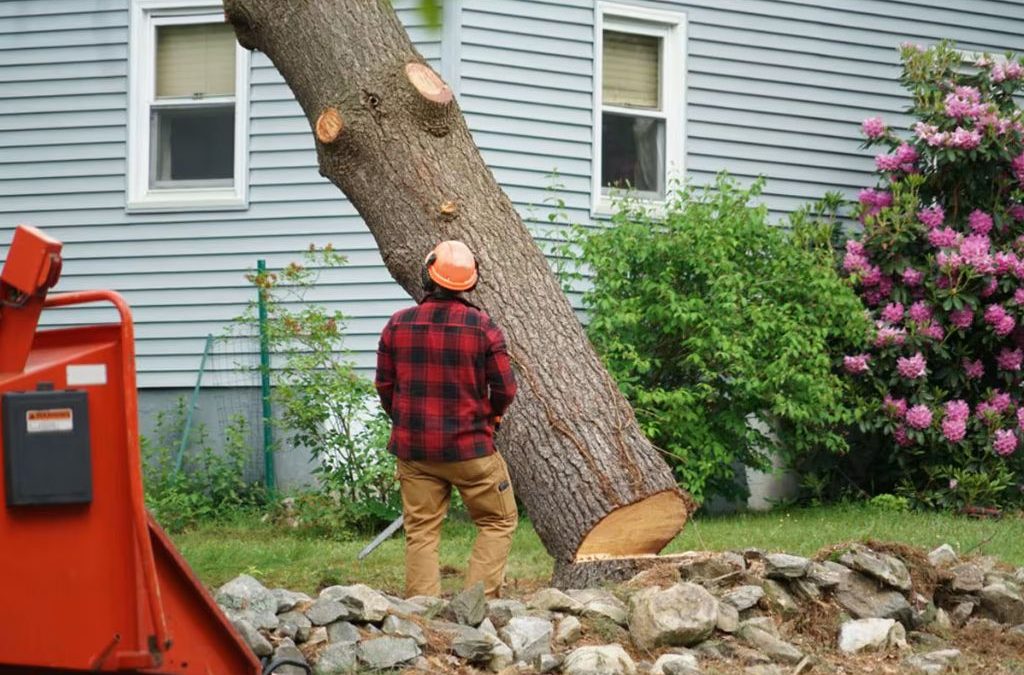
Proximity to structures and powerlines: Trees near powerlines require an accredited line-clearance arborist, adding $500-$2,000 to the price. Trees overhanging roofs, fences, or neighbouring properties require careful sectional removal with rigging equipment rather than simple felling – skilled, time-intensive work regardless of the tree’s overall size.
Species & wood density: Hardwood eucalyptus species are heavier and harder to cut than softwoods like pine, which impacts labour time and equipment wear. A 10-metre ironbark is a different proposition to a 10-metre pine at the same height.
Tree health: Did you know dead trees can actually cost more to remove than healthy ones? Dead wood is unpredictable and requires more careful dismantling techniques – which qualified arborists account for in their pricing.
Q: How much does palm tree removal cost?
A: Palm tree removal cost is calculated differently to standard trees – and it catches people out.
Palms don’t have branches in the traditional sense, so height alone isn’t the primary driver.
Those are:
- Trunk diameter
- Frond volume
- Access.
For a standard residential palm with reasonable access, expect to pay broadly in the $400-$1,500 range, depending on height and trunk girth. Tall palms – particularly Canary Island date palms with their heavy, spiky fronds – sit toward the higher end and sometimes beyond it.
Multiple palms removed in a single visit are almost always cheaper per tree than individual callouts.
Q: Is stump removal included – And what does tree stump removal cost?
A: Simple answer – it’s almost never included, unless you specifically ask and it’s itemised in the quote.
Tree stump removal cost is almost always a separate line item – and it’s worth asking about upfront so you’re not surprised after the tree is down.
Expect to add $150-$500 for stump grinding depending on stump size and access.
Stump grinding – where a machine chips the stump to below ground level – is the standard approach for most residential properties. It’s faster, less disruptive, and more cost-effective than full root extraction, which is rarely necessary unless you’re laying concrete or building over the area.
Left in place, stumps attract termites, can continue to send up shoots, and become a tripping hazard over time. For most homeowners, stump grinding is worth adding to the quote at the same time as the removal.
Q: What’s tree trunk removal cost – Is that different?
A: Sometimes!
If a tree has been previously felled or fallen and you’re left with a significant trunk section still above ground, tree trunk removal cost is quoted based on:
- The size of the remaining material
- How it needs to be sectioned
- How accessible it is for removal.
It’s not the same as stump grinding – trunk sections require cutting, handling, and disposal that stump grinders don’t cover.
If you have a large fallen trunk or a previously lopped tree with a substantial above-ground section remaining, get a specific quote that addresses that material rather than assuming it’s included in a standard stump grind price.
Q: Do I need a council permit – And does that add to the cost of tree removal?
A: Possibly – and this is one of the most important questions to ask before you book anyone.
Permit requirements vary significantly by:
- Council
- Tree species
- Trunk diameter
- And sometimes by the tree’s proximity to a property boundary.
What’s freely removable in one suburb can be a protected species across the street. Standard permit applications cost $100-$500, depending on the council and the tree’s significance.
An arborist report, which is often required as part of the permit application, costs $300-$800.
Protected trees or heritage-listed species may require a full development application – a more involved and expensive process.
Fines for removing a protected tree without approval can run to tens of thousands of dollars. Always check with your local council or ask a qualified arborist before any work begins.
Q: What does emergency tree removal cost?
A: More!
And not just that, the premium is real. Emergency tree removal typically costs 30-50% more than a scheduled job due to urgency, after-hours rates, and the additional safety complexity of storm-damaged, partially fallen, or structurally compromised trees.
If a tree is posing an immediate threat to your property, a neighbouring property, or a person, treat it as an emergency and call immediately – but go in with realistic expectations on price. The premium reflects genuine additional risk and resource deployment, not opportunism.
Q: Can I use a tree removal cost calculator to get an estimate?
A: A tree removal cost calculator is useful for getting a rough ballpark before you make any calls – and it’s a reasonable starting point for budgeting.
Most of the calculators you might have seen ask for tree height, location, and access difficulty and return a range based on those inputs. The limitation is that calculators can’t see what a qualified arborist can see on-site.
Things like:
- Root systems
- Internal decay
- Structural lean
- Proximity to infrastructure
- Soil conditions
- The dozens of other factors that affect how a job actually gets done.
Use a calculator to frame your expectations – then get at least two in-person quotes from licensed, insured arborists before committing.
Q: What happens if I just leave it?
A: Unfortunately, more than most people expect – and the costs compound over time.
A structurally compromised tree that falls on a roof, fence, car, or neighbouring property can cause damage well into the tens of thousands. Insurance coverage in these situations often depends on whether you took reasonable steps to address a known risk. An ignored arborist recommendation is difficult to defend.
Invasive root systems damage underground pipes, crack driveways and pathways, lift retaining walls, and undermine foundations. Root-related repairs to drainage or structural elements routinely cost multiples of what the tree removal itself would have.
Dead trees and neglected stumps are among the most common termite attractants in Australian residential properties. A termite infestation that starts in a neglected stump and spreads to the home’s structure is an expensive outcome from a visible, addressable problem.
And if your council has flagged the tree as a hazard and you haven’t acted, the liability exposure – both financial and legal – grows with every passing storm season.
Ready to get a quote?
The big takeaway message here is that the longer a problem tree sits unaddressed, the more it costs – in damage, in liability, and eventually in a removal bill that’s larger and more urgent than it needed to be. Getting a proper assessment now is almost always the cheaper option.
Tradie Near Me connects Australian homeowners with licensed, insured, and reviewed arborists and tree removal specialists ready to assess your property and provide an obligation-free quote.
Book online today – and a local tree removal specialist will be in touch fast.